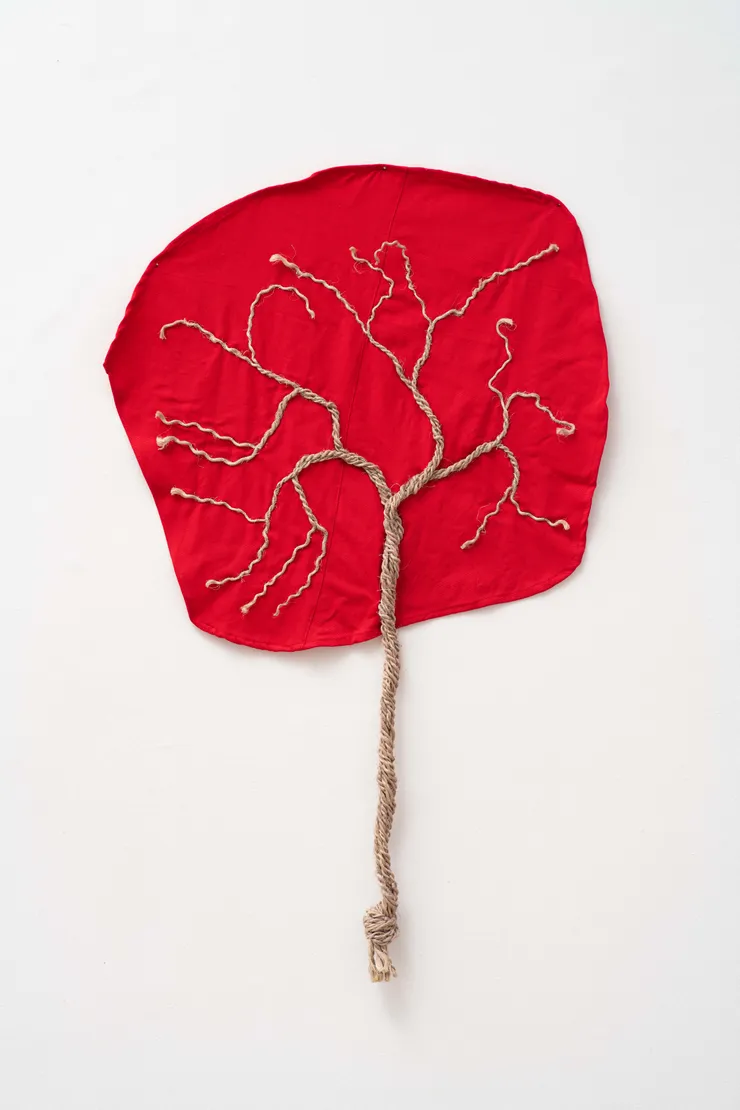
Antonio Pichillá | Geometría Intercultural

Antonio Pichillá – Geometry, Spirituality, and Archaeologies of the Present
It is not that stones are mute,
They simply keep their silence.
– Humberto Ak'abal
Spirituality is the backbone of Antonio Pichillá’s work, running through every series, material, and format. This is not spirituality as abstraction, detached from the material world, nor as a transcendence stripped of history. It is deeply situated – rooted in the Mayan worldview and in the living practices of his community in San Pedro La Laguna. In his work, the spiritual does not emerge as a thematic focus, it functions as structure – a way of organizing the world, of thinking about time, and of relating body, territory, and memory to one another.
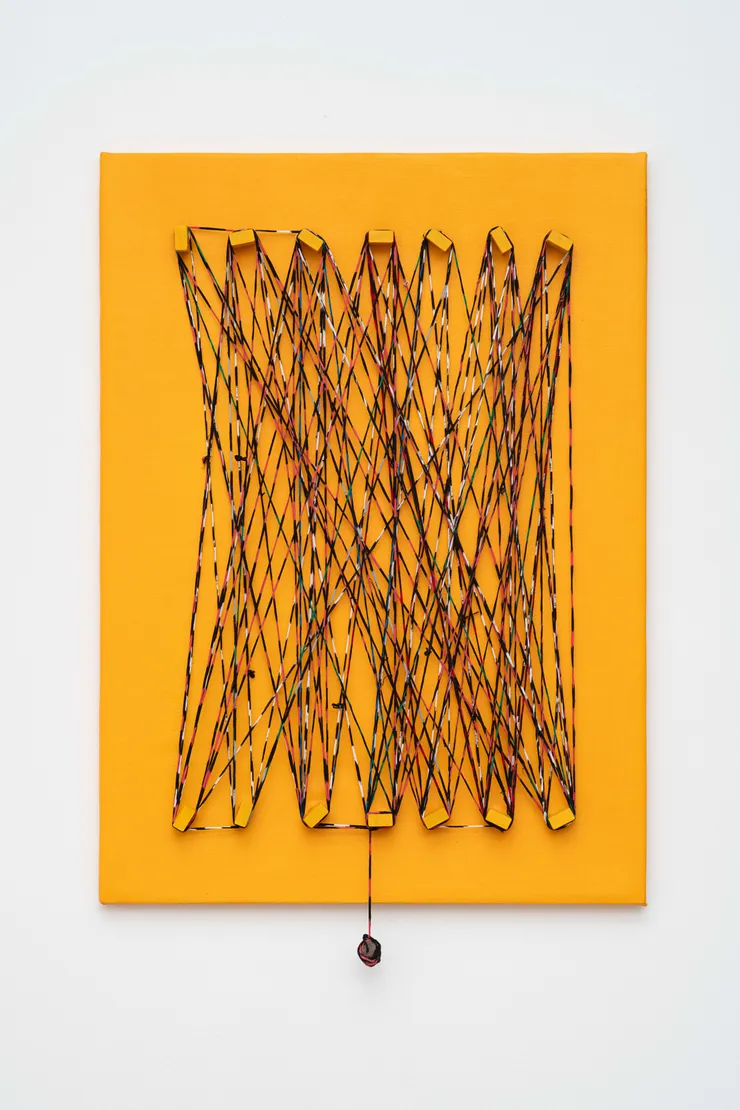
Within Pichillá’s universe, geometry occupies a central place – though not as an autonomous formal language. It functions as a symbolic system rich in meaning, conveying ancestral knowledge that unfolds across two separate traditions: the Mayan codices and the textiles woven on the backstrap loom. The erroneously named Madrid Codex – a Mayan manuscript displaced from its cultural context and now held by a Spanish institution – stands as a key reference. What draws Pichillá to it is not only its sacred iconography – ritual elements, calendars, the feathered serpent – but something more fundamental: the way it gives visual form to knowledge. Diagramming, repetition, rhythm, accumulation – these form a geometric mode of thought in which image, writing, and spirituality are inseparable.
This same logic runs through Mayan textiles, passed down from generation to generation, particularly those tied to the traditional dress of the Tz’utujil people. Here, geometry is neither rigid nor mathematical; it is flexible and organic, intimately bound to the body that wears it. Each pattern is at once ornament, narrative, and marker of identity; each variation introduces difference while keeping the textile language alive. For Pichillá, these textiles are not ethnographic citations – they are carriers of active knowledge, capable of speaking to the present without losing their historical density.
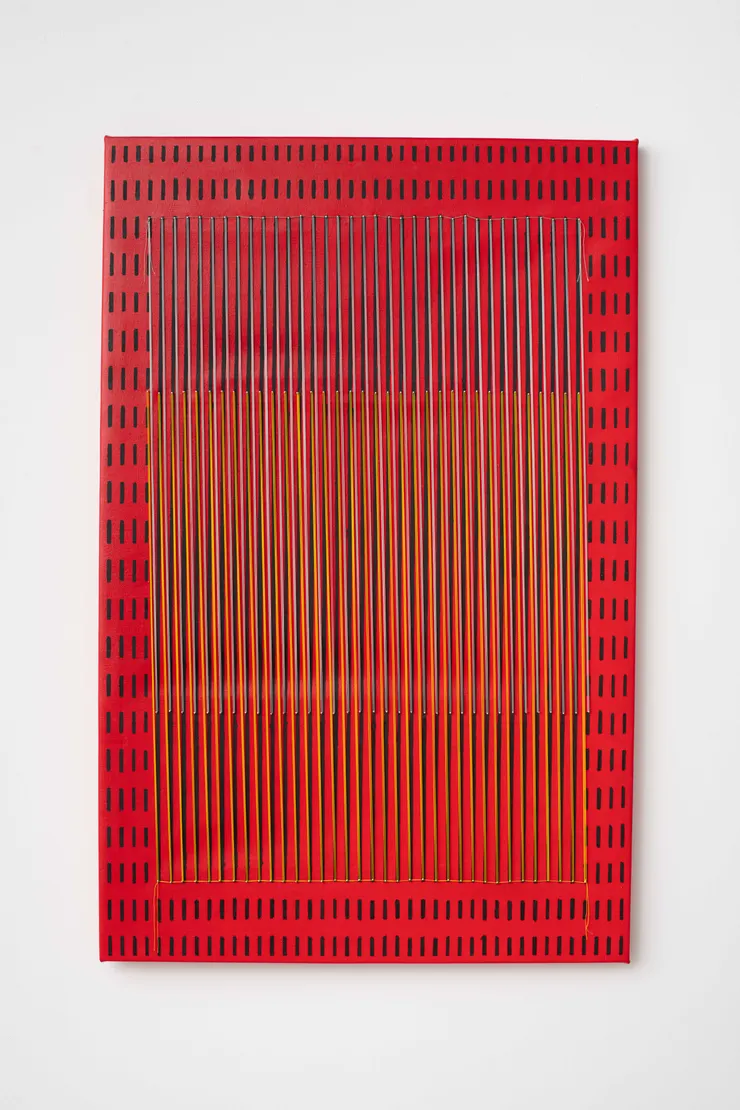
The artworks Abuelo [Grandfather] and Abuela [Grandmother] make this operation especially clear. Both begin with the traditional Tz'utujil garment – its vertical black lines and the textiles woven by women – as a point of departure. From there, Antonio alters patterns, rescales forms, and reassigns functions. In Abuelo, he paints the geometric pattern directly onto canvas and then overlays it with threads that impart kinetic effects to its surface, drawing ancestral geometry into dialogue with the canonical format of Western painting.
More than transposing a motif from one support to another, Pichillá activates a zone of friction between two distinct visual and cultural systems – and the canvas, no longer a neutral ground, becomes a field of negotiation where both languages coexist without hierarchy or forced assimilation.
The notion of “intercultural geometry” allows us to situate his practice beyond the categories inherited from modern art history. Where geometric abstraction historically emerged from major artistic centers, Pichillá shifts the emphasis toward a grounded, relational abstraction. Here, geometry does not arise from individual gesture or formal isolation; it grows out of networks of family ties, collective knowledge, and transmitted memory, with textile-making at its core.
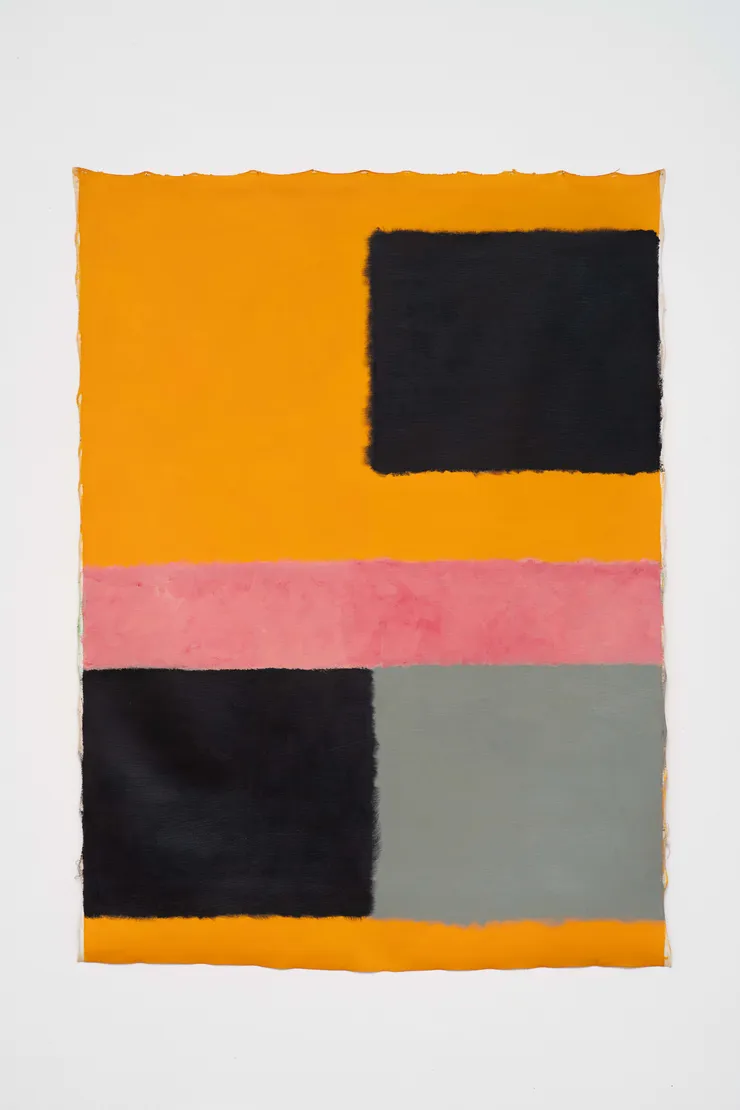
In works such as Nudo [Knot] (2017), part of an ongoing series, the artist binds a traditional textile to a geometric painting on canvas, physically tying the two supports together as if to declare: here we meet, here we correspond. From 2019 onward, this investigation expanded into irregular formats – trapezoids, displaced rectangles – that destabilize the pictorial plane and evoke, without establishing direct lineage, the metaesquemas of Hélio Oiticica.
This approach engages into a productive dialogue with the geometric tradition in Brazilian art, especially those movements that, from the mid-twentieth century onward, sought to reposition abstraction toward the body, space, and lived experience. Without formal equivalences or closed genealogies, Pichillá’s work resonates with an expanded understanding of geometry as an open field in which the sensory, the ethical, and the political intertwine. His abstraction does not aspire to modern universality; it asserts itself from the specificity of a territory and a history shaped by colonization, violence, and resistance.
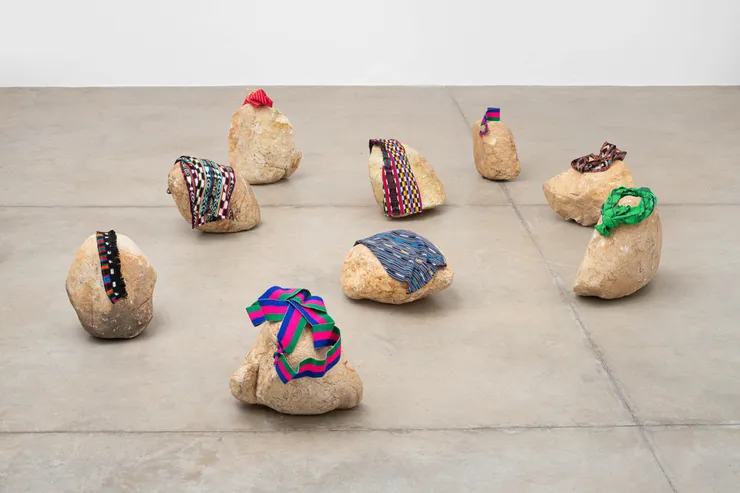
As a material counterpoint to textiles and canvases, stones occupy a central role in the artist’s recent series. Pichillá collects them, wraps them in traditional Mayan textiles, and places them directly on the floor, activating a distinct relationship with the exhibition space. These works can be read through the idea of a contemporary archaeology – not an excavation of the past as inert object, but a summoning of ancient time into the present. The stone appears as an ancestral body, older than human history, bearer of a geological memory that enters into dialogue with textile memory.
At this point, the poetry of Humberto Ak’abal resonates as a kindred voice. In his verses, the stone is not an inert object but a being that listens, remembers, thinks, and remains in silence. The same sensibility runs through Pichillá’s installations, where matter becomes an interlocutor and art a form of listening. The archaeology proposed here does not classify or order; rather, it relates, cares for, and activates.
Throughout more than two decades of work, Antonio Pichillá has developed a notion of “intercultural geometry” in which past, present, and future are not arranged linearly but coexist as layers of experience and knowledge. Geometry, textile, and stone do not operate as separate languages; they function instead as strata of a single visual and spiritual thought, capable of articulating memory, body, and territory.
This first solo exhibition in São Paulo does more than trace a trajectory through different series and moments in Pichillá’s practice. It opens a broader field of reflection on abstraction and spirituality as forms of knowledge, and on the possibilities of an archaeology of the present. Through the notion of intercultural geometry, his work proposes a nonviolent contemporaneity: a space of coexistence in which multiple histories and sensibilities can share ground without erasing one another.