-
13.05 - 17.05.26
Luciana Brito galeria
FARGO 2026
Booth
G8
Afonso Tostes | caio reisewitz | Campana
Delson Uchôa | Gabriela MachadO | Geraldo de BarrosIvÁn Navarro | Regina Silveira | Rob Wynne
-
Delson Uchôa
1956, Maceió, Brazil. Lives and works in Maceió, Brazil. -
-
The main object in Delson Uchôa’s research is light, which he identifies with his region of origin: the city of Maceió, in northeast Brazil. It is through light that the artist works with time, color, texture and transparency – as well as scale, since most of his paintings have monumental dimensions and take years to finish. He also studies the natural chromaticity of the flora and fauna of that region, which he combines with the Northeastern popular constructive geometry. Considered one of the main artists of the “80s Generation” of Brazilian painting, Delson also works with photography and sculpture – practices he considers as ways of constructing colors, that is, as extensions of painting.
With a degree in medicine received from the Federal University of Alagoas in 1981, Delson Uchôa studied painting at Fundação Pierre Chalita. He has held solo shows at renowned institutions such as the Museu Oscar Niemeyer (Curitiba, Brazil, 2023) Museu do Estado de Pernambuco (Recife, Brazil, 2022), Museu de Ecologia e Escultura (São Paulo, Brazil 2018), Ludwig Museum (Koblenz, Germany 2015), Centro Cultural São Paulo (São Paulo, Brazil, 2012), and Instituto Tomie Ohtake (São Paulo, Brazil 2003), as well as in group shows in Museuns such MASP (São Paulo, Brazil, 2025), CCBB (Brazil, 2025, 2022), Museu Nacional da República (Brasília, Brazil, 2017), Museu de Arte do Rio (Brazil, 2016, 2014), MAM (São Paulo, Brazil, 2007, 1995), among others. He has participated extensively in national and international art biennials, such as those of Venice, São Paulo, Havana and Cairo, and his works figure in important collections, including those of Inhotim (Brumadinho, Brazil), the Museu de Arte Moderna do Rio de Janeiro (Brazil), the Museu de Arte Moderna de São Paulo (Brazil), the Pinacoteca do Estado de São Paulo (Brasil), the Vogt Collection (Berlin, Germany) and the York Stack Collection (Berlin, Germany).
-

-
-
Afonso Tostes
1965, Belo Horizonte, Brazil. Lives and works in Rio de Janeiro, Brazil. -
-
Material and its structure, as well as forms of connection, fixation and support, are the concepts that Afonso Tostes finds most interesting. And in the 2000s the artist began an investigation that now guides his work: tridimensionality and its representation in space. This research springs from a consistent evolution since the outset of his career, which has included the study of organic structural forms in drawing and in painting. Known for his large installations, Tostes recovers the previous histories of materials, mainly wood, revealing and transforming their narratives, according to a sensitive reconstruction of the exhibition space, or even through the resignification of preexisting smaller objects such as work tools and utensils.
Afonso Tostes studied arts at Escola Guignard (1980, Belo Horizonte/ MG) and, later, at the Escola de Artes Visuais do Parque Lage (1989 to 1994, Rio de Janeiro). The venues of his main solo shows have included Fundação Iberê Camargo (2023, Porto Alegre, Brazil), Sesc Pompeia (2019, São Paulo, Brazil), Casa França Brasil (2013, Rio de Janeiro, Brazil), Museu de Arte Moderna – MAM/RJ (2011, Rio de Janeiro, Brazil), Museu de Arte Contemporânea – MAC Niterói (2009, Rio de Janeiro, Brazil), Centro Cultural Maria Antônia (2003, São Paulo, Brazil) and Centro Cultural São Paulo – CCSP (1996, São Paulo, Brazil). He has participated in group shows at Casa de Cultura do Parque (2025, São Paulo, Brazil), Casa Roberto Marinho (2023, Rio de Janeiro, Brazil), Museu de Arte do Rio – MAR (2020, Rio de Janeiro, Brazil), Fondation Cartier pour l’Art Contemporain (2019, Paris, France), National Art Museum of China (2018, Beijing, China), Frestas Trienal Sesc (2014, Sorocaba, Brazil), Instituto Tomie Ohtake (2010, São Paulo, Brazil) and the 5th Bienal do Mercosul (2005, Porto Alegre, Brazil). His work figures in important collections such as those of MAM-RJ (Brazil), MAM-BA (Brazil), MAC Niterói (Brazil), Fondation Cartier pour l’Art Contemporain (France) and Coleção SESC de Arte (Brazil). -
-
-
-
-
Campana
Fernando and Humberto Campana. Estúdio Campana.Fernando Campana. 1961, Brotas, São Paulo, Brazil - 2022, São Paulo, Brazil
Humberto Campana. 1953, Rio Claro, São Paulo, Brazil. Lives and works in São Paulo, Brazil -
-
The brothers Fernando and Humberto Campana were partners since 1983, being recognized worldwide for their work in design. Their art, which was previously strictly in furniture, now extends beyond the limits of multidisciplinarity and establishes design as a path for telling stories, uniting architecture, fashion, scenography and landscape architecture. Through their studio, Estúdio Campana, the brothers have pushed the envelope in terms of the resignification, recovery and reuse of materials, proposing simple and creative solutions, while recovering manual practice. The collective popular mindset of Brazil, with its colors and shapes, is translated into dramatic pieces full of movement and meaning, promoting the art of design as a tool for the exchange of knowledge, transformation and social inclusion. Humberto Campana has led the works with Campana Studio and Foundation since 2022.
The Estúdio Campana was founded in 1984. Their first solo show was held at Nucleon 8 (1989), followed by the Pinacoteca do Estado de São Paulo (1991), the Museu da Casa Brasileira (1996, São Paulo, Brazil), MAM-SP (2001), the Design Museum, London (2004), the Victoria & Albert Museum, London (2007), the Musée Des Arts Decoratifs, Paris (2012), and MAM-RJ (2020), The Power Station of Art, Shanghai (2024, Shanghai, China), among many other venues. The venues of group shows they have participated in have most notably included Centre Pompidou - Metz (2025 and 2023), Design Museum, London (2022), MoMA-NY (1998), the Crystal Palace, Milan (2003), Centre Pompidou (2005), the Triennale di Milano (2015), Somerset House, London (2018), the Museum of Fine Arts, Houston (2020) and the Denver Art Museum (2021). Their pieces figure in important collections such as those of Centre Pompidou (France), the Musée Des Arts Décoratifs (France), MoMA-NY (USA) and MAM-SP (Brazil). In 2009, they founded the Instituto Campana to promote design as a social tool. They have also received various honors and awards, being ranked among the most important design professionals by the magazine Wallpaper (2014–15), and, in 2012, they were conferred the Colbert Committee Award (Paris), honored by Design Week (Beijing), received the Order of Cultural Merit (DF) and the Order of Arts and Letters of the Ministry of Culture of France, and were elected as Designers of the Year by Maison & Objet of Paris. In 2008, they won the Design/Miami Designer of the Year Prize. -
-
-
Caio Reisewitz
1967, São Paulo, Brazil. Lives and works in São Paulo, Brazil -
-
-
-
Iván Navarro
1972, Santiago, Chile. Lives and works in New York, USA. -
-
The appeal of Iván Navarro’s works springs from a combination of elements that question our perception. On the one hand, from a formalist point of view, his works are carefully constructed, having light as their main support. Light that arouses feelings, at the same time that it sparks enchantment in the spectator. Iván Navarro’s production is also imbued with political connotations, communicated to the public through countless strategies, as seen in the titles of his works, in his careful use of color, in the use of anagrams, or in the appropriation and deconstruction of symbols that represent ideologies and institutionalized power.
Iván Navarro graduated in visual arts, in Santiago, Chile, in 1995. He has held solo shows at prominent institutions such as Gare Villejuif - Gustave Roussy, Paris, France (2026), Centro Cultural Gabriela Mistral, Santiago, Chile (2025), Galpón Santa Elena, Santiago, Chile (2025), La Capilla Azul, Chiloé, Chile (2024), Micromuseo di arte Contemporanea della Tuscia, Italy (2023), Art-OMI Sculpture Park, Ghent, USA (2022), Farol Santander, São Paulo (2020); MAC – Niterói, RJ (2019); MACBA, Buenos Aires, Argentina (2019); the Museu Nacional de Belas Artes, Santiago, Chile (2015); and the Espace Culturel Louis Vuitton, Paris, France (2010). Titles and venues of group shows he has participated in most notably include the Knoxville Museum of Art, Knoxville, USA (2025), Centro de Arte Caja de Burgos, Burgos, Spain (2024), Illuminate SF Festival of Light, São Francisco, USA (2020); the XIV Bienal de Nuevos Medios, Museo Nacional de Bellas Artes, Santiago, Chile (2019); the 13th Biennale of Cairo, Egypt (2019); MACBA, Buenos Aires, Argentina (2018); Guggenheim NY, USA (2018); the Museo del Barrio, NY, USA (2017); MuBE-SP (2016); the Centro Nacional de Arte Contemporáneo, Santiago, Chile (2016); the 10th Bienal do Mercosul, Porto Alegre (2015); the Cairo International Biennale, Egypt (2010); the 53rd Biennale di Venezia, Italy (2009); and the 2nd Moscow Biennale, Russia (2007). His works figure in the collections of important institutions such as the Centro Galego de Arte Contemporánea (Spain), the Fonds National d’Art Contemporain (France), the Hirshhorn Museum and Sculpture Garden (USA), Inhotim, the Museum of Fine Arts (Boston, USA), the Saatchi Collection (England) and the Solomon R. Guggenheim Museum (USA).
-
-
Gabriela Machado
1960, Joinville, Brazil. Lives and works in Rio de Janeiro, Brazil. -
-
Gabriela Machado’s research is focused mainly on painting. The imagery of day-to-day experience is a great source of inspiration, providing the artist with parameters for landscapes and still lifes, in which she emulates small slices of everyday life on the canvas. Her processes spring from quick, organic and spontaneous gesturality, lending pure visuality to the lively colors and forms. As an outgrowth of this aesthetics, she also creates sculptures, in which she investigates shapes through the potentials of other materials, such as clay, plaster and bronze.
Gabriela Machado received her BA in architecture from Universidade Santa Úrsula (RJ), in 1984. She then furthered her studies in art at the Escola de Artes Visuais do Parque Lage (RJ), between 1985 in 1993, as well as in open courses. She has held solo shows at notable venues including Fundação Eugênio de Almeida (2019, Évora, Portugal), the Museu de Arte de Santa Catarina (2018, Santa Catarina), Auroras (2017, São Paulo), MAM (2016, Rio de Janeiro), the Espaço Caixa Cultural (2009, São Paulo and Rio de Janeiro), and the CCBB (2002, Rio de Janeiro). She has participated in group shows held by prestigious museums and organizations that include Instituto Figueiredo Ferraz (2025, Ribeirão Preto, Brazil), Paço Imperial (2014, Rio de Janeiro), Oi Futuro (2014, Rio de Janeiro), Instituto Figueiredo Ferraz (2025 and 2012, Ribeirão Preto) (2012, São Paulo), Centro Cultural São Paulo (2011, São Paulo), the Museu de Arte da Pampulha (2010, Belo Horizonte), Centro Universitário Maria Antônia (2002, São Paulo), and MAM (1999, Salvador). Her work figures in the collections of important institutions, including those of the Museu de Arte da Pampulha (Belo Horizonte), the Instituto Brasileiro de Arte Contemporânea (IBAC, Rio de Janeiro), and the Museu de Arte de Santa Catarina (Santa Catarina).
-
-
-
-
-
-
Rob Wynne
USA, 1948. Lives and works in New York, USA. -
-
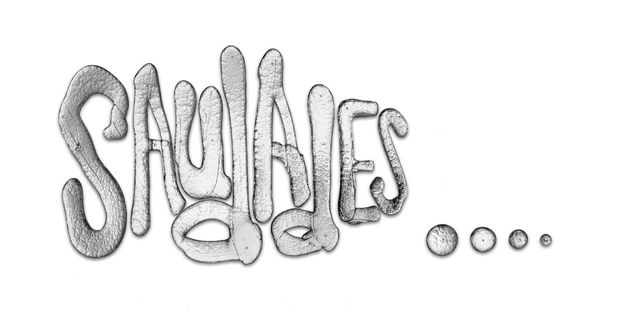
Rob Wynne is a collector of memories. Keenly aware of his own context and popular culture, the artist uses visual syntax to combine fragments excerpted from conversations, literature, theater, cinema, etc., in works that involve images and, primarily, texts as the main elements – whether in sculptures, installations, collages, digital prints, or embroidery. One of his preferred materials is glass, from which he typically obtains organic forms that he manually spreads. His investigation is also influenced by concepts reminiscent of Fluxus, the 1960s American art movement that used an experimental and multidisciplinary approach to forge connections between everyday life with art, and with which he was intimately related.
With a degree in art from the Pratt Institute (New York, USA), Rob Wynne has held solo shows at important venues that include the Norton Museum of Art (2019 and 2012, Palm Beach, USA), the Brooklyn Museum (2019, New York, USA), and New York University (1994, New York, USA). He has also participated in group shows at institutions that include New Orleans Museum of Art (2017, New Orleans, USA), Massachusetts College of Art & Design (2017, Boston, USA), the Museum of Modern Art (2013, New York, USA), the Georgia Museum of Fine Art (2005, Athens, USA), and P.S.1 Institute for Contemporary Art (1998, Long Island City, USA). His works figure in important public and private collections, such as those of the Brooklyn Museum of Art (USA), Centre Pompidou (France), Museum of Fine Arts (USA), Columbus Museum of Art, Columbus (USA), the Museum of Modern Art – MoMA (USA), the Whitney Museum of Art (USA), the Philadelphia Museum of Art (USA), Frac des Pays de la Loire (France), the Bibliothèque National Paris (France), and Norton Museum of Art (USA). In 2023, the publishing house Gregory R. Miller & Co released his monograph Obstacle Illusion.
-
-
-
-
-
Luciana Brito Gallery is pleased to announce its participation in the 8th edition of FARGO—Feira de Arte de Goiás, one of the state’s leading art platforms. For the event, the gallery has selected works by artists Afonso Tostes (1965, Brazil), Caio Reisewitz (1967, Brazil), Campana (Fernando Campana, 1965–2022, Brazil), Humberto Campana, 1953, Brazil), Delson Uchôa (1956, Brazil), Gabriela Machado (1960, Brazil), Iván Navarro (1972, Chile), and Rob Wynne (1948, USA).
Wood is central to Afonso Tostes’s practice, both for its symbolic weight and its formal qualities, mobilizing questions concerning sustainability and the environment. In the metal sculpture shown here, from an untitled series begun in 2026, Tostes sets up a counterpoint to his better-known pieces in wood, where he uses found tree trunks and fragments to build compositions marked by instability – an allusion to the imbalance of forests. The gallery is also presenting Árvore pequena (2023), made from paper obtained from discarded books, alongside a group of untitled paintings from 2025. In these works, Tostes uses dust and wood residue from his own production to activate a poetics of reconstructing what has been lost – here, the trees themselves.
The gallery also features two works by Caio Reisewitz. One of a series of photographs taken at the coastal inlet known as Saco do Mamanguá, in Paraty (Rio de Janeiro state), Mamanguá XXII (2013) belongs to Reisewitz’s investigation of remote landscapes that evoke a sense of human absence. The region is known as Brazil’s only “tropical fjord” – an eight-kilometer marine inlet surrounded by mountains of the Atlantic Forest. Imperceptible to the naked eye, the image was captured at night through long-exposure analog photography, using Kodak slide film. Its bluish tone results from reciprocity failure, which occurs when the film’s response to incoming light is no longer in linear relation to exposure time, causing characteristic shifts in color. The work Jacupiranga (2025) derives from the artist’s recent research, developed with Tatiana Gonçales and Allan Yzumizawa, on São Paulo place names. It was produced in the Cananéia region, historically crisscrossed by a vast network of precolonial trails called the Caminho de Peabiru, which connected the Atlantic coast of Brazil to the Pacific Ocean, in present-day Peru, passing through territories that are now part of Paraguay and Bolivia. The route was used by both Indigenous peoples and European explorers.
From Estúdio Campana, Cadeira Teddy Bear marrom (2025) and Puff Netuno (2025) belong to the Banquete collection and continue a line of inquiry the studio has long pursued, in which furniture pieces incorporate unconventional elements – such as plush materials. Drawing on the banquet as a site of encounter, abundance, and sensory pleasure, the Banquete collection is characterized by generous volumes, soft textures, and organic forms. These pieces shift the functional object into the realm of sensory and affective experience, evoking associations with childhood and memory and inviting a tactile, emotional experience. Here, design moves toward gesture, humor, and intimacy, reaffirming the studio’s commitment to reinventing materials and the stories they carry.
A researcher of color, Delson Uchôa takes as his point of departure the distinct luminosity of his region – the coastline of Alagoas. In his paintings, he engages not only the strident intensity of the Alagoas sun and the region’s lush plant life, but also chromatic references drawn from Indigenous featherwork. This interplay between light and matter, evident in smaller works such as Construção I não posso esquecer Mondrian (2022), unfolds in intricate geometric patterns that produce striking optical effects.
Gabriela Machado’s paintings, on the other hand, reveal fragments of her daily life. The scenes, colors, and forms that pass through her days are her primary source of inspiration; since 2017, she has used them to build pictorial narratives with the quality of a logbook. Her larger works, such as Catuaba (2025), open onto a more bodily scale, marked by gestural expressiveness and rapid, organic processes through which the artist externalizes feelings and states of mind.
Light is the central axis of Iván Navarro’s practice, which he uses to address social and political questions and to convey reflections on art history. In light installations such as Square Light (2019), Navarro establishes a direct dialogue with minimalism while activating the viewer’s perception.
Rob Wynne, the most recent artist to join the roster of Luciana Brito Galeria, develops his work through an ongoing process of collecting and recombining memories. Always attentive to his surroundings and to expressions of popular culture, Wynne combines fragments drawn from conversation, literature, theater, and cinema, often turning language itself into the central material of his work. His engagement with glass – a recurring element in his practice – began during a visit to a glassworks. When a ladle he was holding slipped and struck the floor, the molten glass took on a form he describes as a kind of “cosmic explosion.” Following that chance event, Wynne began exploring glass in its liquid state, shaping organic forms that retain the contingent, almost accidental character of their origin.